
Case Study
We tested Intermarché's Christmas ad
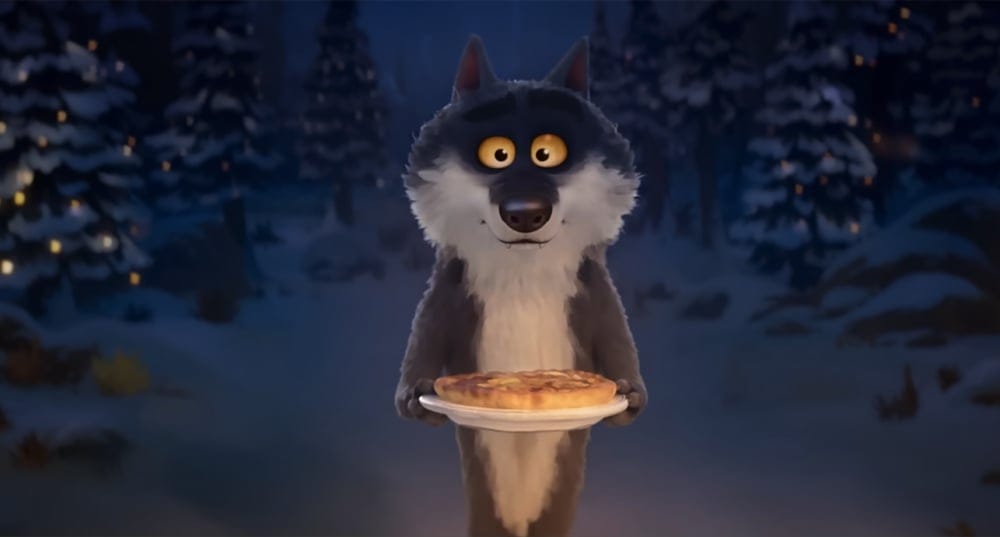
A true social phenomenon, Intermarché's 2025 Christmas campaign triggered an emotional tidal wave of unprecedented magnitude. We wondered whether Airpanel could have predicted the film's success.
To take on this challenge, we showed the three-minute short film to 30 Airpanelists aged 18 to 60, who were placed in a strictly controlled environment with no access to the internet. They watched the film and shared their immediate reactions with us.
Here is a summary of the findings from the 25-page report generated by Airpanel in just a few minutes:
An emotional success that bypasses advertising ‘noise’
When asked about the exceptional nature of their feelings, the panellists were almost unanimous: the film provokes a much greater emotional response than usual advertisements. It is not seen as a simple commercial, but as a narrative work in its own right that rewards the viewer's attention.
"‘I didn't look at my phone for a single second, which is quite an achievement during the adverts!’"
Elodie F., 28 y.o, simulated by AI
"Oh yes, absolutely. Usually I barely watch the adverts, I'm on my phone. But this time I looked up, especially when the animation started. It's not just an advert for washing-up liquid. It's on another level."
Théo R., 22 y.o, simulated by AI
A memorable impact and proven rarity
The test reveals a striking ‘collective memory gap’: almost all of the panel expressed great difficulty in remembering another advertisement that had evoked a similar emotion. This finding highlights the rarity of the experience. Notably, the only points of comparison that emerge spontaneously are previous campaigns by the same brand, proving that Intermarché has succeeded in building a unique and consistent communication strategy.
"Oh... good question. It must have been another Christmas, maybe? There are adverts like that which leave a lasting impression, but they're rare. I can't say exactly, but it was a while ago."
Juliette B., 23 y.o, simulated by AI
"Hmm... I think the last time was another Intermarché advert, actually. The one with the young man shopping for a girl, with the song “L'amour l'amour”. It was a bit the same spirit."
Thierry B., 34 y.o, simulated by AI
Beyond the attention it attracted, it was the power of the archetype that struck our consumer agents. The story of the ‘unloved’ person searching for their place triggers a primal and universal fear: social rejection.
‘Eating Better’: From a health injunction to a lever for inclusion
The most profound insight revealed by the study concerns the semantic shift made by the brand. Here, ‘eating better’ is no longer a dietary constraint or a health imperative, but a language for connecting with others. Food becomes a bridge, a tool for resolving existential angst.
One of our panellists, whose profile simulates that of a professional chef, perfectly decoded this strategic intention with astonishing accuracy:
"You've understood the essential point. That cooking is a language. It's a way of saying “I care about you” without opening your mouth. The wolf doesn't know how to make himself accepted, so he cooks for others. That's... that's absolutely right."
Jean-Luc B., 55-year-old chef simulated by AI
The Vegetarian Wolf: A mirror of new consciousness
The choice to show a wolf abandoning meat in favour of vegetables and mushrooms did not go unnoticed. For audiences sensitive to dietary transitions, this detail is perceived as a strong signal of modernity and openness on the part of Intermarché.
For Sophie L., a 28-year-old vegan graphic designer, the simulation generated a very strong identity projection:
"Well done for daring to try something different from the traditional family meal with meat at the centre of the table. (...) It's a message of hope, in a way. (...) It suggests that they are attentive to new ways of consuming."
The audacity of the long format: between weariness and scepticism
Despite this overwhelming approval, qualitative analysis reveals some real points of friction, foremost among which is the length of the format. At nearly three minutes, this duration is the main source of fatigue, causing a slight drop in attention halfway through, particularly during the musical sequence.
"It's a bit long. I admit that in the middle of the song, I looked at the time."
Louis H., 50-year-old truck driver simulated by AI
In addition, a more analytical segment of the audience expressed some skepticism about the staging, which they considered too “calibrated.” For these profiles, the perception of an overly polished “marketing machine” sometimes hinders the transition from tenderness to pure emotion.
"It's so polished, so calibrated, you can feel the marketing machine behind it that has calculated everything to push the right emotional buttons."
Mathieu L., 34, software engineer simulated by AI
A faithful simulation of the film's exceptional impact
This test demonstrates Airpanel's ability to faithfully simulate the intensity of cognitive and emotional reactions to a brand message.
Airpanel's AI agents not only predicted massive emotional engagement, but also deciphered the underlying tensions with surgical precision: the sense of nostalgia linked to the soundtrack, admiration for artistic direction worthy of major movie studios, and minor skepticism from a fringe segment of the audience.
👉 Want to know more?
Ask us for the full study report to discover:
The main strengths and weaknesses identified
The strategic thematic analysis
The results question by question, illustrated with verbatim quotes
The detailed analysis of the two consumer personas: “The Conscious Enthusiast” and “The Tender Pragmatist.”
Full transcripts of the 30 qualitative interviews.
Contact us
Leave your details and we’ll get back to you shortly.