
Case Study
We tested the Jaguar rebranding
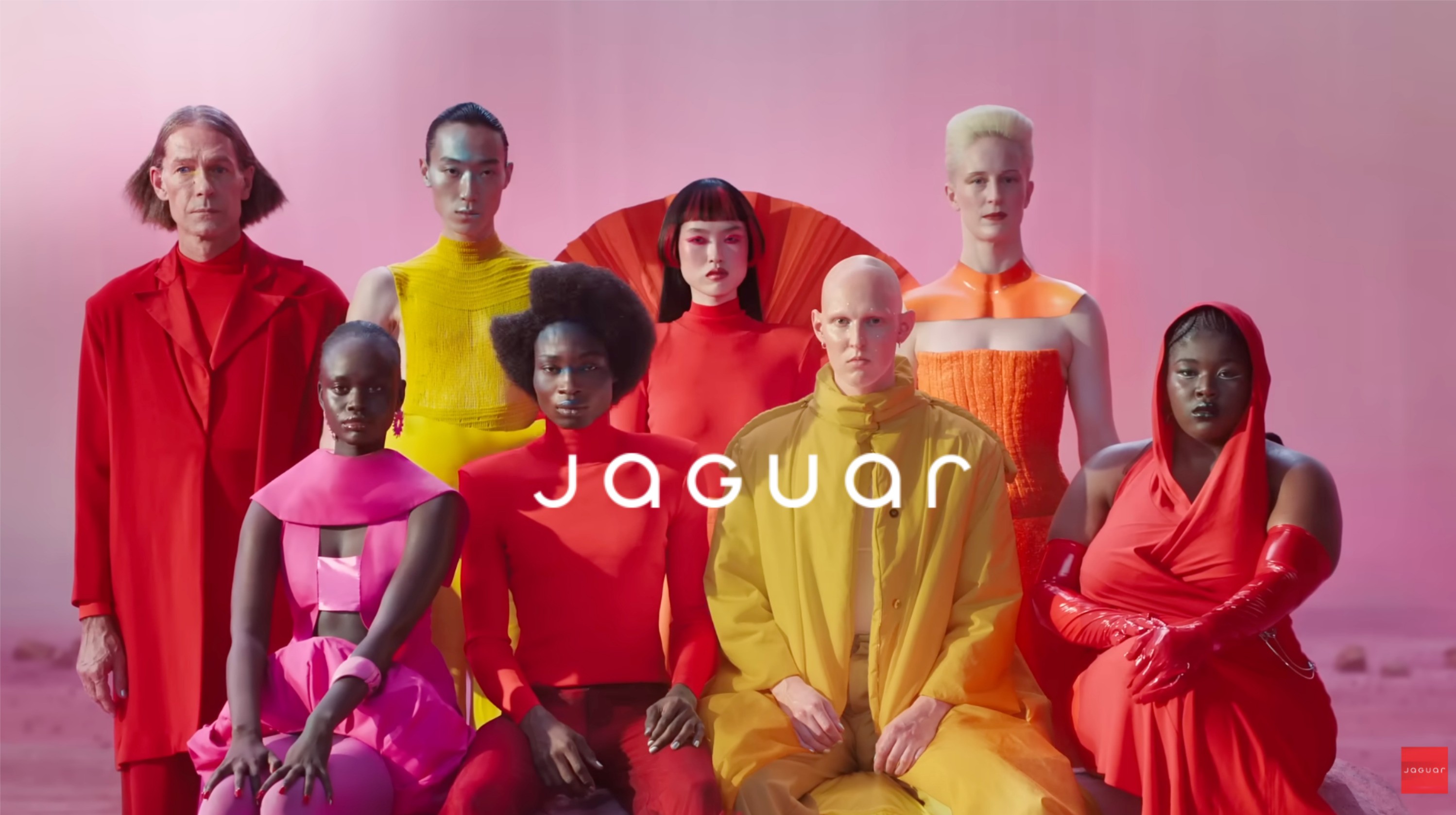
The reveal of Jaguar’s new visual manifesto, centered around the radical promise "Copy Nothing," sent shockwaves through the automotive industry and beyond. Faced with this total break from the historical codes of British luxury, we wanted to see if Airpanel could have modeled the complexity of this reception even before public debate ignited.
To meet this challenge, we engaged a diverse sample of 30 Airpanelists aged 18 to 80. Here is the video they reviewed:
And here is a snapshot of the insights extracted from the Airpanel report in just a few minutes:
Magnetic Aesthetics vs. a Cold Emotional Barrier
While the artistic quality and bold color palette are unanimously praised, they are accompanied by a sense of "clinical coldness." The film succeeds in capturing attention through its strangeness but fails, for the majority, to create a human connection. The characters, perceived as expressionless "statues," establish a barrier rather than an aspiration.
"It’s very aesthetic, but it’s cold. It doesn’t tell a story... it didn't touch me, no."
Henriette L., 32, AI-simulated
A Violent Break from Jaguar’s Brand Heritage
One of the most striking findings is the brutal cognitive dissonance triggered by the logo reveal. For our agents, Jaguar remains intrinsically linked to a triad of traditional values: British elegance, status-driven luxury, and the warmth of noble materials (wood, leather). By replacing this DNA with a futuristic, abstract aesthetic, the brand isn't just modernizing; it is pulverizing its own symbolic landmarks.
"It feels like they’re forgetting where they came from, their history. They want to be so modern that they’re losing their soul."
Alain B., 58, AI-simulated
"I feel like they’re trying to... act young, to modernize, but it’s so forced it almost becomes ridiculous."
Jean-Pierre M., 65, AI-simulated
The Frustration of the Absent Product: A Risk of Attrition
The major friction point identified by our panelists is the total absence of the vehicle. By selling a disembodied concept, Jaguar creates strong cognitive dissonance: the consumer’s brain seeks the link between the stated philosophy and the automotive object but never finds it.
"Show me the car! Make me dream with beautiful curves, a nice engine sound, a leather interior... That’s what a Jaguar is. Not a carnival parade."
Jean-Pierre M., 65, AI-simulated
A Manifesto for a Creative Elite, a Signal of Exclusion for Others
The sociological dimension of the film is perhaps the sharpest insight: the film is perceived as a test of cultural capital. It divides the audience into two camps: a micro-niche of "urban artists" it addresses, and "normal people" whom it seems to ignore or deliberately exclude.
"Ah, it’s for... young rich people in big cities, I guess. Artists, fashion people. Those who want to show they’re different. Not for a retiree in Brittany, that’s for sure. Nor for my kids, for that matter. It’s for a small niche of people."
Henri N., 67, AI-simulated
"Clearly not me, haha. I think they’re targeting... people who have a lot of money but want to show they’re not 'typical' bourgeois. People who see themselves as artists, opinion leaders. Basically, very, very wealthy 'bobos' [bourgeois-bohemians]."
Amandine L., 19, AI-simulated
"It’s dusted off the image I had of them. Before, Jaguar was a brand that didn't speak to me at all [...]. Now, I’m thinking 'hey, they’re trying something.' It makes them more... interesting."
Rémy B., 29, AI-simulated
A Faithful Simulation of a Rebranding Failure
This test demonstrates Airpanel’s ability to accurately simulate the diversity of real-world reactions to a highly polarizing brand message, capturing nuances of social, territorial, and cultural rejection. Our AI agents spontaneously modeled the deep rift between a "creative urban elite" and the general public, identifying a widespread perception of luxury as haughty, cold, and dehumanized.
Even more striking, the simulation surfaced verbatims of a quasi-political nature: while younger profiles welcomed the inclusivity of the casting, a large portion of the audience criticized the diversity as a "forced marketing stance" or a "disguise" that betrays Jaguar’s heritage. From the retiree in rural France to the taxi driver in Bordeaux, our panelists expressed a radical sense of exclusion from codes (haute couture, contemporary art, lack of product) they judge to be pretentious and disconnected from their reality.
The platform's ability to project such complex and nuanced human truths confirms that Airpanel is not just a visual testing tool, but a true mirror of consumer sociological sensitivity. For any brand considering a major strategic shift, it is the ultimate insurance to identify friction points before the message reaches a definitive breaking point with its market.
👉 Want to learn more?
Request the full study report to discover:
Key Strengths & Weaknesses: A comprehensive breakdown.
Strategic Thematic Analysis: Deep dives into core brand perceptions.
Question-by-Question Results: Detailed data illustrated with verbatims.
Persona Analysis: Profiles of "The Disconcerted Pragmatist" vs. "The Creative Esthete."
Full Transcripts: Complete records of all 30 qualitative interviews.
Contact us
Leave your details and we’ll get back to you shortly.